
Project Launch for Training and Simulation for Tunnel Operations
In September , a new European research project was launched in Brussels. It aims to improve tunnel safety, operational skills, and emergency readiness by creating a unified European framework for tunnel training and simulation.
The PAIDEIA* project (Program for Advancing Immersive and Digital Education and training solutions for tunnel Infrastructure and Assets) will be carried out on behalf of the Conference of European Directors of Roads (CEDR), a non-profit organisation that provides a leading platform for cooperation and strategic coordination among national road authorities across Europe. An international consortium led by Sweco (Belgium) will deliver the work, in collaboration with Sovik Consulting AS (Norway), Sweco (Netherlands), Ruhr University Bochum (Germany), Risk Design and Engineering (Italy), and Chenext (Belgium).
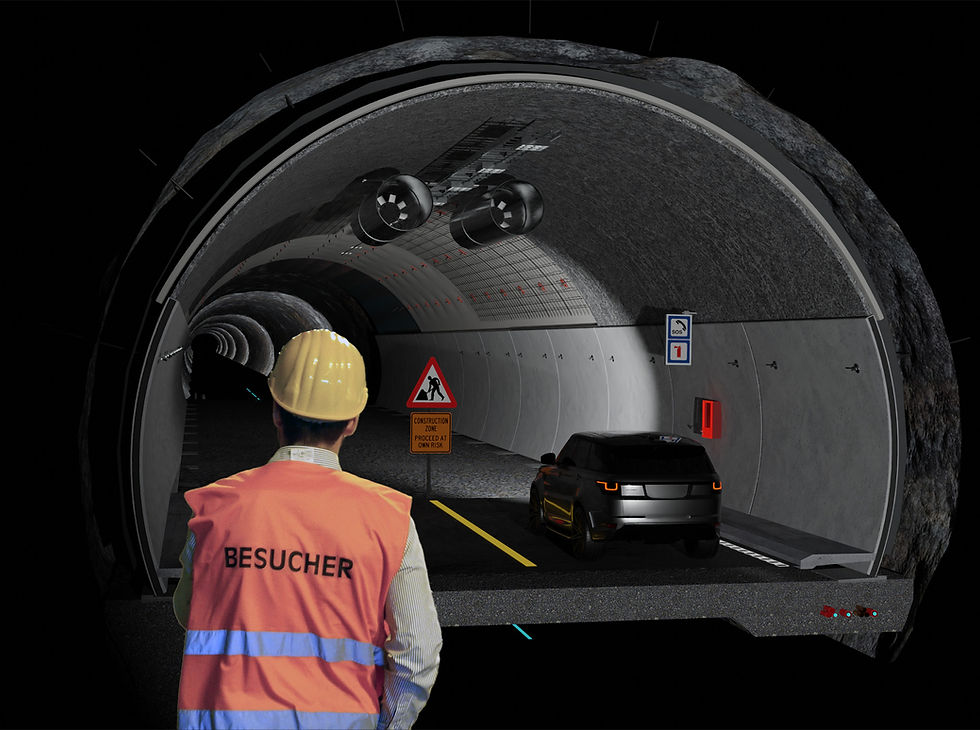
By combining expertise from different countries and technical disciplines, the consortium will develop a harmonised approach to competence development, promote knowledge exchange and explore innovative simulation technologies. The overall ambition is to establish a common European foundation for tunnel training that supports safer, more resilient and more sustainable tunnel operations.
Addressing Common European Challenges
Tunnels are a critical part of Europe's transport infrastructure. Their safe and efficient operation depends not only on technical systems and infrastructure design but also on the knowledge, skills and preparedness of the people responsible for managing, operating and maintaining them, as well as those responding to incidents and emergencies.
Despite facing many similar challenges, European countries and organisations have developed different approaches to tunnel training and competence management. Training programmes, competence requirements, learning methodologies and access to realistic simulation facilities vary considerably.
These differences can limit knowledge transfer, make it difficult to compare competence levels, and create barriers to establishing consistent training standards across Europe. At the same time, existing national approaches and initiatives represent a valuable foundation of knowledge, experience and best practices. By sharing these experiences and building on established solutions through European collaboration, we can further develop and strengthen tunnel training and competence development across Europe.
We aim to address these challenges by establishing a coherent, scalable and harmonised European framework for tunnel training and simulation. The framework will provide a common foundation for competence development while retaining the flexibility needed to accommodate national regulations, organisational structures, tunnel characteristics and operational requirements.
Rather than replacing existing national training systems, the project seeks to build on established practices, identify opportunities for improvement and facilitate greater cooperation across national and organisational boundaries.
From Fragmented Training to a Shared European Competence Framework
A central objective of the project is to establish a common understanding of the knowledge and skills required for safe and effective tunnel operations.
The project will begin by mapping existing training programmes, facilities, competence requirements and learning methodologies across Europe. This analysis will also examine different tunnel typologies, identify relevant professional groups and assess the availability of training infrastructure.
By identifying existing strengths, competence gaps and opportunities for improvement, the project will establish a foundation for a more coordinated European approach to tunnel training.
Building on these findings, we will develop a harmonised, role-based competence framework defining essential skills and learning objectives for the different professional groups involved in tunnel operations.
The framework will recognise that tunnel operators, maintenance personnel, emergency responders and management personnel have different responsibilities and competence requirements. It will establish common baseline competencies while allowing training programmes to be adapted to specific national and organisational contexts.
The project will also develop generic requirements for tunnel training centres, supporting greater consistency in training quality, learning objectives and competence development across Europe.
The objective is not to introduce a rigid, uniform training system but to establish a shared European foundation that enables countries and organisations to develop training programmes suited to their operational needs.
Modernising Tunnel Training Through Simulation and Digital Innovation
Effective tunnel training requires a combination of theoretical knowledge, practical experience and the ability to respond to complex operational situations.
While traditional classroom training remains essential, realistic, scenario-based learning plays an increasingly important role in preparing personnel for situations they may rarely encounter during normal operations.
We will investigate how modern simulation technologies and digital training tools can complement existing training methods and create new opportunities for competence development.
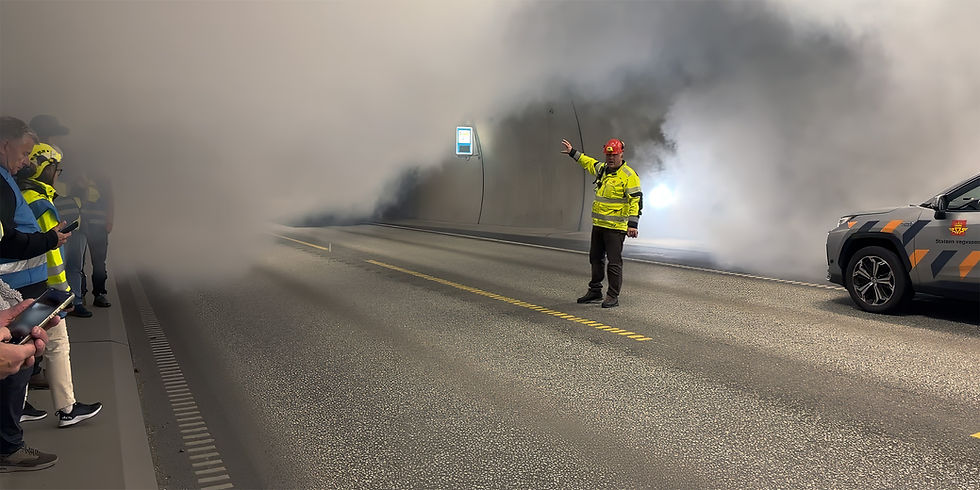
Technologies such as virtual reality (VR), immersive learning environments, serious gaming and digital twins offer opportunities to simulate operational conditions and emergency scenarios that may be difficult, costly or unsafe to reproduce in real tunnels.
These technologies can provide controlled learning environments in which personnel can practise decision-making, develop operational skills and improve coordination between different organisations and professional groups.
However, introducing new technology does not automatically lead to better training. Its effectiveness depends on clearly defined learning objectives, appropriate training methodologies and the ability to evaluate learning outcomes.
We will therefore assess the suitability of different simulation technologies and develop practical guidance on when and how they should be applied to tunnel-specific operational and emergency scenarios.
The ambition is to support realistic, accessible and cost-effective training solutions that can be adopted by organisations with different resources, operational responsibilities and levels of technological maturity.
Developing Flexible and Scalable Training Solutions
European tunnel infrastructure varies significantly in design, complexity, traffic characteristics, operational arrangements and available resources. Consequently, a single standardised training programme cannot adequately address every operational requirement.
We will develop a modular, blended training concept that combines different learning methods and can be adapted to specific professional groups, competence levels, and tunnel environments.
The concept will support progressive competence development, ranging from introductory training and fundamental operational knowledge to advanced technical skills and complex emergency response exercises.
By combining common learning objectives with flexible training modules, the project aims to make high-quality tunnel training more accessible to organisations of different sizes and with varying levels of training infrastructure.
This approach will also create opportunities to share training materials, methodologies, and practical experience between European countries, reducing duplication of effort and supporting more efficient use of available resources.
Establishing a Culture of Continuous Learning
Professional competence cannot be developed through initial training alone. Maintaining safe and efficient tunnel operations requires continuous learning, regular exercises and the systematic transfer of knowledge and operational experience.
One challenge facing tunnel organisations is ensuring that knowledge gained through everyday operations, emergency exercises, and real incidents is retained and translated into improved practices.
The project recognises that competence development must become an integral part of tunnel management rather than an isolated activity undertaken primarily to fulfil formal training requirements.
The project will therefore develop guidance on embedding continuous learning into organisational practices, including systematically evaluating training outcomes and integrating lessons learned from operational experience, incidents, and emergency exercises.
Particular attention will be given to strengthening the connection between theoretical knowledge, practical training and real operational challenges.
By encouraging organisations to evaluate training effectiveness, share operational experiences and systematically incorporate lessons learned, the work aims to support a more proactive and sustainable approach to competence management.
The ultimate objective is to help organisations establish a learning culture in which professional competence is continuously developed, maintained and improved throughout an individual's career.
Towards a European Tunnel Training Network
Beyond developing competence frameworks and guidance on training technologies, the project has a broader ambition: to establish the foundations for sustained European cooperation in tunnel training and competence development.
The project will develop a roadmap towards a future European Tunnel Training Network, addressing governance, organisational structures, quality assurance, investment requirements and opportunities for collaboration.
Such a network could facilitate the exchange of expertise, training resources, simulation technologies and operational experience between tunnel owners, operators, emergency services, training institutions, research organisations and industry stakeholders.
It could also support the continuous development of common competence standards and provide a platform for adapting training programmes to emerging technologies, changing operational challenges and future regulatory requirements.
A key part of this ambition is to make existing knowledge and training resources more widely accessible, enabling organisations to benefit from expertise and experience developed elsewhere in Europe.
The long-term objective is to create a collaborative European environment in which knowledge, training resources and practical experience can be shared, evaluated and continuously developed.
Strengthening European Tunnel Safety Through Cooperation
This project addresses a fundamental aspect of tunnel safety: ensuring that the people responsible for tunnel operations and emergency preparedness have the knowledge, skills and practical experience required to perform their responsibilities effectively.
By bringing together existing knowledge, identifying competence gaps, establishing shared learning objectives and evaluating innovative training methodologies, the project aims to improve the quality, consistency and accessibility of tunnel training across Europe.
Its combination of harmonised competence requirements, flexible training concepts, realistic simulation and continuous organisational learning provides a foundation for addressing both current and emerging operational challenges.
Equally important, the project seeks to strengthen cooperation between European countries and organisations, recognising that many of the challenges associated with tunnel operations and emergency preparedness are shared across national borders.
The project's ambition extends beyond harmonising training. It aims to establish a common European foundation for developing, maintaining, and continuously improving professional competence throughout the tunnel sector.
Through European cooperation, systematic knowledge exchange and digital innovation, CEDR aims to contribute to safer, more resilient and more sustainable tunnel infrastructure across Europe.
*PAIDEIA - Program for Advancing Immersive and Digital Education and training solutions for tunnel Infrastructure and Assets, commissioned by CEDR, the primary purpose of the PAIDEIA project is to address the specialized operational and safety challenges within tunnel environments. The initiative aims to bolster the professional capacity and competence of those involved in tunnel management and operations, ensuring consistent safety, efficiency, and knowledge transfer across various organizations and countries. Recognizing the current lack of tailored training programs, the project seeks to create harmonized methods to effectively prepare professionals for the complex and high-risk tunnel environment.
Project Partners: Sweco BV; Sweco Netherlands BV; Risk Design Engineering; Sovik Consulting AS; Ruhr University Bochum, Institute for Tunnelling and Construction Management; Chenext Technologies


Kommentarer